Research
Recent Publications
Sexual Violence against Political Prisoners: an Examination of Empirical Evidence in El Salvador and Peru
This paper asks, “what motivates state armed actors to rape, torture, or otherwise sexually victimize prisoners in times of war? Is wartime sexual violence a strategic weapon of war?”
It argues that when there is a clear pattern of sexual violence occurring at times, places and in contexts which appear beneficial to the state’s goals; when sexual abuse is targeted against particular subgroups of the population, perpetrated in state-controlled detention centers, often with the express knowledge or participation of high-ranking officers, and when these crimes go uninvestigated and unpunished, it is untenable to suggest that leaders had no knowledge of and did not benefit from the continued practice of sexual violence.
The evidence presented in this article shows that the sexual abuse of political prisoners in El Salvador and Peru was either explicitly ordered by the politico-military command or was permitted under a doctrine of total warfare, wherein “anything goes” in the state’s fight against "terrorism.” In both scenarios, sexual violence can be seen as a strategic weapon of war, used to advance the state’s interests and goals.
read more...
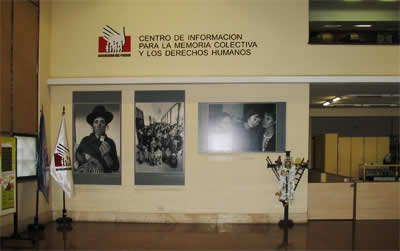 Archive Center of the Truth & Reconciliation Commission, Lima, Peru
The Promise and Peril of Primary Documents: Documenting Wartime Sexual Violence in El Salvador and Peru
in Bergsmo, Morten, Butenschøn Skre, Alf and Elisabeth J. Wood, eds. 2012. Understanding and Proving International Sex Crimes, Beijing: Torkel Opsahl, Academic EPublisher. Download the full article
This article explores the methodological obstacles to research on wartime sexual violence and the extent to which they can be overcome with archival research. It discusses issues of concept formation, counting victims of human rights abuse, and coding violations. It compares figures from the final reports of the Truth Commissions in El Salvador and Peru, an analysis of their published materials and an analysis of the primary documents and finds that (1) the number of reported cases of sexual violence varies significantly depending on the data source, (2) men were more often the targets of sexual vioelnce than previously thought, and (3) sexual humiliation and sexual torture were common practices of the state armed forces during the conflicts.
Wartime Sexual Violence in Guatemala and Peru
International Studies Quarterly (2009) 53, 445–468 Download the full article
This article is a comparative analysis of sexual violence perpetrated by state armed forces during the Guatemalan and Peruvian civil wars. Focusing on the type of violation and the context in which it occurs provides new insights into the motives behind its use in war. It introduces a new data set on sexual violence compiled from truth commission documents and nongovernmental human rights organizations’ reports.
The data reveal that members of the state armed forces perpetrated the majority of sexual violations, that rape and gang rape are the most frequent but not the only abuses committed, and that women are the overwhelming majority of victims of sexual violence. Aggregate patterns suggest that state authorities must have known of mass sexual abuse and failed to act in accordance with international law. Moreover, some evidence suggests sexual violence is used as a weapon of war. However, mono-causal models cannot sufficiently account for the variation and complexity in its use. Even within the same conflict, sexual violence can serve multiple functions in different contexts and at different points in time.
read more...
Selected Working Papers
Human Rights Organizations as Agents of Change: an Experimental Examination of HRO Framing and Micromobilization
with Matthew Krain and Kyla McEntire
Using an experimental research design, we test the efficacy of the three framing strategies most frequently used by international HROs. The results demonstrate that informational, personal and motivational frames are more effective at fostering consensus mobilization than they are at action mobilization. Personal narratives appear to be the most consistently successful, increasing individuals’ knowledge on the issue, their emotional reaction to the issue, and as a consequence, leading them to reject the practice and participate in a grassroots campaign to demand its cessation.
The Geography of Wartime Sexual Violence: Identifying Hot Spots
with Kimberly Proctor
This paper presents a two-stage model that incorporates spatial statistics (density of road networks, terrain characteristics, proximity to airstrips, location of armed battles, etc.) in its explanation of the geographic variation in the frequency of sexual violence to determine what underlying geographic, socioeocnomic or conflict-related indicators determine whether a region will figure disproportionately in the frequency of sexual violence.